High-stakes decisions do not fail only because people misjudge risk. They also fail because the data under the decision is weak. A wrong land record can derail a purchase. A wrong number in a betting system can distort the entire choice. In both cases, the error enters early and spreads fast.
This is why data accuracy matters more than speed, design, or even experience. If the record is wrong, the conclusion will lean the wrong way. It is like building on wet soil. The surface may look firm, but the load will shift.
Land ownership depends on exact records. Names, survey numbers, boundary details, mutation entries, and title history must align. A small mismatch can trigger delay, dispute, or financial loss. The buyer may think they are acquiring a secure asset, while the document trail tells a different story.
Odds-based systems work in a similar way. They also depend on clean inputs. Scores, timing, probabilities, and market data must update correctly. If the feed is delayed or inaccurate, the user no longer makes a decision based on the event. The user reacts to a flawed model of the event.
The two fields look far apart. One deals with land parcels and public records. The other deals with fast-moving numbers and live choices. Yet both rely on the same foundation: trusted data before action.
That shared foundation matters because both settings punish error in the same way. Bad input leads to false confidence. False confidence leads to costly action. By the time the mistake becomes visible, the money, time, or legal exposure is already on the table.
This article examines how that process works. It starts with the core issue: why data accuracy is not just a technical feature, but the base layer of every serious decision.
Next, we examine why small data errors create large downstream risk in both land records and odds-based systems.
Why Small Data Errors Create Large Downstream Risk
Most failures do not start with big mistakes. They start with small errors that pass unnoticed. A wrong digit. A missing entry. A delayed update. These seem minor at first. They are not.
In land records, a single mismatch can shift ownership status. A name spelled differently across documents can block verification. A missing mutation entry can hide a transfer. The buyer sees a clean surface. The record carries a hidden break.
The problem grows because decisions stack. One step depends on the last. If the base layer is wrong, each new step amplifies the error. By the time the issue appears, the cost has multiplied.
Odds-based systems follow the same pattern. A slight delay in data feed changes perception. A score update arrives late. The system still shows old conditions. The user acts on that view.
In fast environments, timing equals accuracy. A live feed labeled as desi sports live must reflect the exact state of play. Even a short lag creates a false window. The user believes they act in real time, but the data has already moved.
This creates false confidence. The user trusts the system because it looks active. Numbers change. Interfaces update. But if the source is off, the activity becomes noise.
The key issue is not the size of the error. It is the position of the error. Early errors spread. Late errors stay contained.
Think of it like a map. If the map shifts by a few meters at the start, every step taken from that point drifts further away from reality. The traveler does not notice until the destination fails to match.
Systems that handle high-stakes decisions must control this drift. They must catch small errors before they compound.
Because once the decision is made, correction becomes expensive.
Next, we examine how verification systems reduce this risk by validating data before it shapes decisions.
How Verification Systems Reduce Risk Before Action
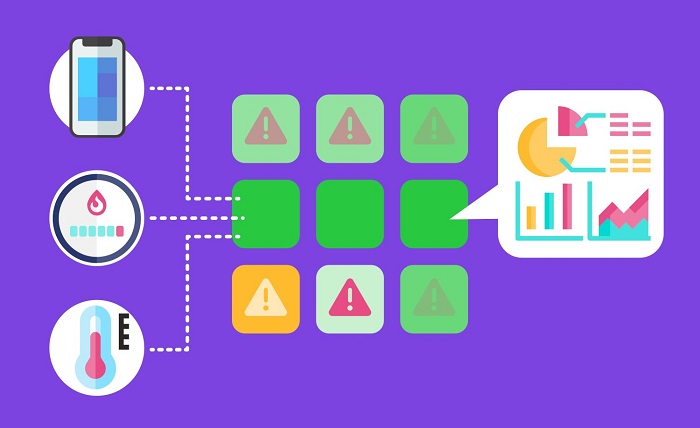
Accuracy does not happen by default. Systems must check, confirm, and cross-verify data before it reaches the user.
In land records, this process is layered. A single document is not enough. Authorities compare survey numbers, ownership history, and mutation entries. Each layer acts like a checkpoint. If one fails, the process stops.
This reduces blind spots. A buyer does not rely on one record. They rely on alignment across records. When multiple sources match, confidence rises. When they conflict, risk becomes visible early.
Digital systems use the same structure. They validate data at the point of entry and at the point of use. A score feed, for example, may pass through several checks before it appears on screen. If one source lags, another corrects it.
This creates redundancy. Not as waste, but as protection. One source can fail. The system still holds.
Timing also matters. Verification must happen before action, not after. A corrected record after a land deal does not undo the cost. A corrected score after a bet does not restore the decision.
Effective systems place checks at critical moments:
- Before display — ensure the user sees accurate data
- Before confirmation — ensure the action uses the latest state
- After update — ensure records stay consistent
Automation strengthens this process. Machines detect mismatches faster than manual review. They flag anomalies in real time. But human oversight still plays a role. Edge cases need judgment, not just rules.
The goal is simple: block weak data from entering the decision path.
When verification works, users do not notice it. They only see smooth, reliable output. When it fails, the error becomes visible through consequence.
Verification does not remove risk. It reduces preventable risk.
Next, we examine how user behavior changes when systems provide clear, accurate, and timely data.
How Accurate Data Changes User Behavior Under Pressure
People adjust their behavior based on what they trust. When data is clear and current, they act with focus. When data is weak, they act with guesswork.
In land decisions, accurate records shorten hesitation. A buyer sees aligned entries, consistent names, and a clean history. The process moves forward without repeated checks. Time shifts from doubt to action.
In odds-based systems, the effect is faster and more visible. A user watches numbers that reflect real conditions. They compare options quickly. They commit without second-guessing the source.
Clarity reduces mental load. The user does not need to verify each step. The system has already done that work. This frees attention for the actual decision, not the data behind it.
The opposite also holds. When data feels unstable, behavior slows. Users recheck. They compare multiple sources. Some delay. Others act anyway, but with lower confidence. Both paths reduce efficiency.
Accurate data also shapes risk tolerance. When inputs are reliable, users accept calculated risk. When inputs are uncertain, they either avoid action or take impulsive risks to compensate. Both distort outcomes.
Consistency builds habit. If a system delivers correct data every time, users learn to trust it. They return. They act faster with each interaction. Trust becomes a default state.
This creates a feedback loop. Better data leads to better decisions. Better decisions reinforce trust. Trust increases engagement.
The key point is simple. Behavior does not change because users become more skilled. It changes because the environment becomes more reliable.
When the ground is firm, people step forward.
Next, we conclude by showing how accuracy, verification, and trust combine into a stable decision-making system.
Accuracy As The Foundation Of High-Stakes Systems
High-stakes systems do not depend on speed alone. They depend on correct input at the start.
Land records and odds-based platforms face the same challenge. They must present data that reflects reality, not an approximation. If that link breaks, every decision built on top of it weakens.
The solution follows a clear structure. First, ensure accuracy at the source. Second, verify it before use. Third, maintain consistency as conditions change. Each step supports the next.
When this structure holds, systems become stable. Users do not pause to question the data. They focus on the decision itself. This reduces friction and improves outcomes.
When it fails, the system shifts into doubt. Users slow down or act blindly. Both paths carry cost.
The lesson is practical. Do not treat data accuracy as a background feature. Treat it as the base layer of the entire system.
Because in high-stakes decisions, the result is only as strong as the data that shaped it.