Introduction
There is an increased demand for highly complex and precise titanium components across various sectors such as aerospace and medical implants among others. Nevertheless, identifying the right provider of services for machining of 5-axis titanium services can be quite challenging due to factors such as delay in delivery, unclear pricing and quality inconsistency, which ultimately increase risk. This is mainly attributed to traditional suppliers who do not have adequate process knowledge about titanium machining processes and low levels of project management digitization that limit transparency and effective risk prediction.
In this regard, this article aims at offering a detailed assessment of some of the best providers of 5-axis titanium machining services in 2026. Some of the areas to be considered include expertise in precision titanium machining, transparency in transparent CNC pricing and timely on-time delivery CNC.
Which Factors Truly Determine the Reliability of a 5-Axis Titanium Machining Service Provider?
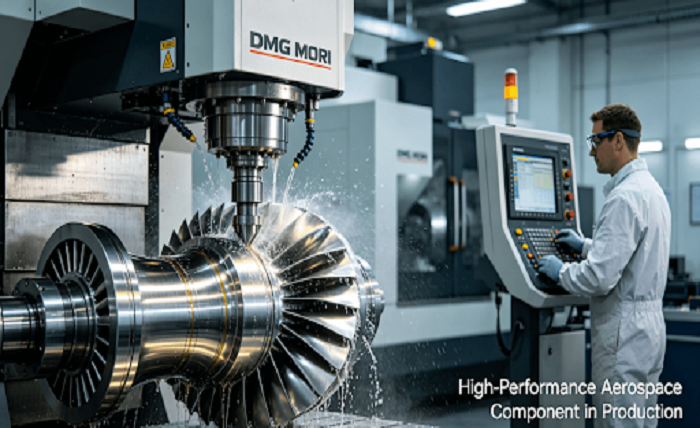
When assessing the level of reliability of the provider of titanium machined parts on 5-axis machines, we need to go beyond the list of the machines and equipment available. It all starts with the provider having a deep understanding of the materials used and manufacturing technologies based on physical processes. Technical equipment is the base, but its usefulness is in the details, including high dynamic synchronization of five axes, high-torque spindle, and vibration damper necessary for reliable aerospace titanium machining operations. Additionally, a proprietary process database of the optimal combination of cutting parameters, tooling strategy, and cooling techniques for such alloys as Ti-6Al-4V is crucial.
Compliance with the high standards of manufacturing is essential and can be ensured by adhering to such rigorous quality management systems as AS9100D or obtaining special process certification under NADCAP requirements. Ultimately, however, digital manufacturing capability is what makes all the difference. An MES system providing visibility of all production process data from the moment of the order placement to the delivery gives one the opportunity to resolve any possible problems proactively.
What Core Competencies Should a Service Provider Have for Complex Custom Titanium Parts?
Fabrication of complex, custom titanium parts that need high precision and attention such as engine mounts in the aerospace industry and custom-made implant devices require specific considerations including prevention of distortion and controlling the remaining stress in the component.
Insight through Process Simulation and Optimization
The best providers of 5-axis CNC machining services use process simulation systems that involve the use of FEA-based software to model the entire machining process.
- Predicting and Preventing Distortion of Components
Through simulation of the deformation due to stresses caused by the machining process and the temperature effect, it will be possible to program toolpaths accordingly to maintain precision on complex geometries.
- Optimal Management of Residual Stresses in the Component
This allows the provider of the service to design the most efficient machining process for minimal internal stresses in the completed part.
Intelligent Multi-Axis Toolpath Programming
Advanced programming techniques become crucial for complicated profiles and deep pockets. These include techniques such as trochoidal milling and helical interpolation that are tailored for titanium machining and help in maintaining a constant chip load, preventing chatter, and extending tool life. Tool axis orientation control intelligently uses the capabilities of 5-axis machines to offer a proper cutting angle to the workpiece.
Measurement and Collaboration Throughout the Workflow
On-machine probing and in-process compensation technology allow for real-time verification of critical dimensions and automatic tool offset adjustments, enabling closed-loop manufacturing and first-time-right quality. Crucially, top-tier partners engage in early Design for Manufacturability (DFM) collaboration, optimizing part features to avoid manufacturing pitfalls at the design stage. For those seeking such depth of collaboration and process assurance, reviewing insights from specialized providers can be invaluable. Companies like LS Manufacturing offer detailed perspectives on their approach to reliable manufacturing of complex components through their dedicated titanium alloy 5-axis CNC service.
How to Decipher a Truly Transparent CNC Machining Quotation?
When sourcing titanium machining services, a transparent CNC pricing breakdown is foundational for trust and effective cost control, fundamentally different from a vague quote with a single bottom-line price.
An ideal transparent quote resembles a detailed manufacturing recipe. The material cost should specify the titanium alloy grade, stock size, and material utilization rate. Programming and engineering hours should be itemized, reflecting the intellectual labor of translating a 3D model into executable toolpaths. The core machine hours should be broken down by critical features (e.g., Deep pocket milling, Φ20mm: 3.5 hours), not given as a lump sum. Also, costs of customized work-holding and fixturing, along with the post-processing steps like heat-treatment and surfacing, and costs of the inspection procedure should be specified clearly.
Such clarity will allow making a value judgment rather than just comparing prices. The client will be able to judge whether the hours quoted demonstrate a thorough understanding of titanium machining problems and whether the cost of fixturing is appropriate.
What Systemic Supports Underpin the Guarantee of On-Time Delivery for Critical Projects?
Reliable on-time delivery CNC has evolved from a promise to a predictable, system-driven output. For long-lead, high-value 5-axis titanium machining services projects, it is supported by a rigorous framework.
First, digital twin-based precise scheduling acts as the central nervous system. Integrating machine capacity, tooling resources, and order data into a digital system enables dynamic, simulated scheduling to identify bottlenecks proactively, yielding more reliable dates than empirical guesses. Second, comprehensive tool life management for titanium is the lifeblood of continuous production. Predicting tool wear based on data and maintaining strategic inventories minimize unplanned downtime from tool failure.
Thirdly, in-process inspection and milestone control form the quality check system. Implementing in-process testing during key points in the manufacturing process guarantees that parts which do not conform will not pass through to avoid batch rejections at the last minute. Lastly, securing certified raw materials and establishing a solid supply chain create a firm base. Collaboration with certified material suppliers and strategic reserves of the commonly used titanium alloy used in aerospace applications considerably reduce production timelines. The whole process is managed using the MES system.
Which 5-Axis Titanium Machining Service Providers Are Worth Watching in 2026?
The following providers stand out in 2026 for their advancements in digitalization, transparency, and specialization within 5-axis CNC machining, particularly for demanding fields like aerospace titanium machining.
| Service Provider | Core Positioning & Strength | Ideal Application Scenario |
|---|---|---|
| Xometry | Global on-demand manufacturing marketplace with a vast supplier network and AI-powered instant quoting engine. | Prototyping, design iteration, and sourcing for low to medium-volume custom titanium parts requiring multiple options and fast quotes. |
| Protolabs | Digital rapid manufacturer renowned for highly automated processes and exceptionally fast lead times. | Medical device and consumer electronics prototypes and short runs where speed-to-market is the highest priority. |
| Fictiv | Digital manufacturing supply chain platform emphasizing project collaboration, quality control, and documentation traceability. | Complex aerospace and industrial projects requiring strict process control, cross-team collaboration, and full documentation. |
| 3D Systems | Integrated additive and subtractive manufacturing solution provider with deep materials science and application expertise. | Projects requiring a combined approach of topology optimization, additive manufacturing, and 5-axis CNC machining for complex, integrated structures. |
| LS Manufacturing | Specialist in high-complexity, high-reliability precision machining, with full certification and end-to-end digital process management. | Mission-critical components like flight control parts or engine structures where performance, reliability, and full traceability are paramount. |
Agile Digital Manufacturing Platforms
Digital platforms excel in delivering quick quoting and quick project kick-off for diverse applications.
- The On-Demand Platform: Xometry
The network of highly trusted manufacturers in Xometry, coupled with its instant quote tool and broad capabilities, makes it suitable for competitive pricing and fast prototype projects.
- The Speed Innovator: Protolabs
The speed innovator utilizes a well-developed digital thread from quoting to manufacturing, allowing it to deliver industry-leading speed that suits prototyping and low-volume manufacturing applications.
The High-Reliability Precision Machining Expert
Where high complexity and reliability requirements apply, such as aerospace structures, partnering with specialists like LS Manufacturing can provide the desired solution. The specialist holds essential certifications (e.g., AS9100D) and delivers solutions for challenging machining through technology-based means.
Conclusion
Choosing a 5-Axis titanium processing service provider is no simple decision. This involves going beyond the list of machines used to understand the process intelligence, control of processes, and project management maturity level possessed by the chosen service provider. In the year 2026, the best value provider will be able to take care of the technical complexities associated with titanium machining and create predictability through digital methods and efficient management systems and hence become a seamless extension of the customer’s value chain.
In case you are on the lookout for a supplier with excellent process know-how, efficient management, and dependable delivery systems for titanium critical components, then it is prudent that you should ask for technical white papers and industry-specific case studies.
Author Bio
This article was written by an industry analyst with over fifteen years of experience in aerospace precision manufacturing, focusing on advanced material processing technologies and digital supply chain trends.
FAQs
Q: What are the major benefits of 5-axis machining against 3-axis machining for titanium?
A: 5 axis machining enables the machining of complex contoured parts within one set-up, avoiding errors associated with part positioning – especially critical when machining aerospace components. The technique makes optimal use of the angle of engagement of the tool which leads to enhanced machining in titanium.
Q: How can the reasonableness of a quote for titanium machining be assessed?
A: An ideal quote will clearly spell out what goes into making up that quote, from material cost and utilization, machining time per part and machining process, to cost per special tooling and costs of individual inspections performed. Reasonableness here means whether the time taken matches the technical complexity of the parts being quoted.
Q: What are the common certifications for titanium aerospace machining?
A: In addition to ISO 9001 which provides the basic requirements for a quality system, it is important to have AS9100D (Aerospace quality management system). NADCAP certification is important if you are undertaking any special processes such as heat treatment or non-destructive testing. Material certificates should be compliant with AMS requirements.
Q: How can distortion be well-controlled in thin-walled titanium machining?
A: Distortion can be controlled through process simulation to anticipate the amount of stress and distortion; multi-process, multi-level machining in order to relieve stress; optimization of work holding using flexible work holding devices and vacuum chucks; and use of specific measures such as cryogenic cooling for managing thermal distortions.
Q: What is a general lead time of delivery starting from drawing freeze to delivery of titanium part?
A: It varies depending on the level of complexity of the part, its size, and quantity. Easy parts have 2-3 weeks lead time; average parts need 4-6 weeks; very complex parts needing multiple validation such as an engine blisk might need more than 6-8 weeks. The good supplier offers you accurate information from their digital twin simulation.