Today’s software development must be fast, scalable and consistent. Companies often use things like Kubernetes, cloud computing, microservices and DevOps practices. But developers spend a lot of time managing infrastructure, setting up environments, and using a bunch of tools instead of writing code. Many companies are now investing in Internal Developer Platforms to fix these problems. What these platforms give developers is the ability to do it yourself, while standardising infrastructure management. Internal Developer Platforms is a skill for people training DevOps Training Online.
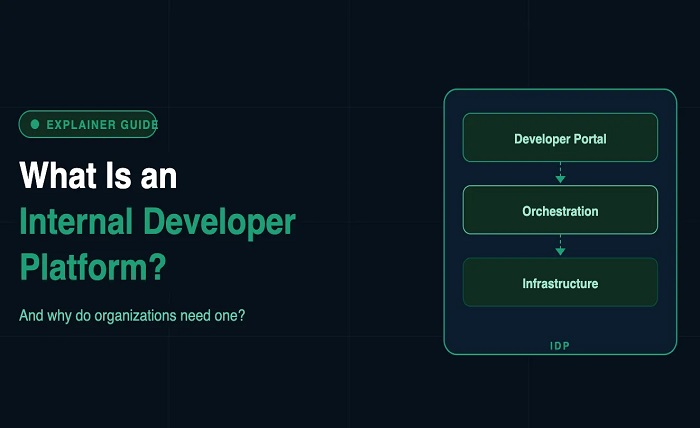
An Internal Developer Platform is essentially a platform built by Platform Engineering teams to make the software development process easier. It is bringing together a lot of stuff like infrastructure automation CI/CD pipelines, Kubernetes, cloud services, security policies, monitoring and developer tools in one-to-use experience. Developers use this platform to deploy applications , set up environments , monitor services and manage deployments through workflows . Internal Developer Platforms are extremely important for software development.
What does Internal Developer Platform (IDP) mean?
An Internal Developer Platform is a set of tools, automation and standardised processes designed to make life easier for developers. It’s not a software product. More like for some internal engineering teams. It serves as an interface of sorts for accessing infrastructure, deployment pipelines, cloud resources, observability tools and development services. This means that developers are able to efficiently do their job using Internal Developer Platforms.
The core of an Internal Developer Platform is really about giving developers the power to use services on their own through automated workflows. This means that developers can use services without having to wait for someone to do it for them. Tools like Infrastructure as Code or IaC for short automatically set up the resources that developers need. They make sure that everything is safe and follows the rules. This way developers can get to the infrastructure they need without any delays.
Internal Developer Platforms are built using a lot of technologies, such as Kubernetes and Docker and Git and also things like CI/CD pipelines and monitoring tools and cloud platforms and identity management systems. These Internal Developer Platforms are really important because they make it easier for developers to do their jobs. Internal Developer Platforms are about using tools, like IaC and Kubernetes to help developers get their work done faster and better.
Internal Developer Platforms are largely software delivery standardisation. They provide templates, deployment patterns, service catalogues, and sanctioned infrastructure configurations. All applications follow the deployment and governance processes, which makes software releases more predictable and reduces configuration drift across environments. This is very important for companies that want to make sure that their software is safe and reliable
Components and Practices for Building an Internal Developer Platform
The first step in Building an Internal Developer Platform is to understand how developers work. Platform Engineering teams have to identify what is repetitive and automate it. This increases developer productivity. This lets them focus on building business functionality. Infrastructure as Code is the heart of any Internal Developer Platform. You can provision infrastructure with technologies like Terraform, OpenTofu or native provisioning services. Your infrastructure changes are version-controlled, auditable and automatically synchronised in GitOps workflows.
Security is at the heart of our platform. It has features like Role-Based Access Control, policy-as-code and secrets management that help keep self-service infrastructure safe. These features also cut down on mistakes in configuration. Automated compliance checks and vulnerability scanning add to the safety net.The platform also offers built-in observability.
This gives developers information about their applications, such, as metrics and logs.They can also see deployment history. Check on infrastructure health.All this helps them troubleshoot issues faster and keep an eye on things before problems arise.
The design goal of an Internal Developer Platform should be to make the developer experience as smooth as possible.There are many professionals that take a DevOps course and gain experience building Internal Developer Platforms. That’s because Internal Developer Platforms are part of modern software development.
Advantages of Internal Developer Platforms for Modern DevOps Teams
A benefit of an Internal Developer Platform is that it increases developer productivity. Less time waiting for operational support means more time building new features, and faster release cycles lead to better engineering efficiency. Internal Developer Platforms also deliver consistency.
Internal Developer Platforms improve collaboration across dev, ops, security and platform engineering teams. A framework for decision-making and more efficient incident resolution is built through shared workflows, monitoring, centralised documentation and automated governance. As engineering organisations grow, they get better at scaling. Platform teams don’t need to provision infrastructure or handle deployment requests. These things developers are able to do on their own, using automated workflows.