You already know this feeling, even if you’ve never named it. Walk into a room full of morning light and something in you eases. Step into a dim, shuttered one and it goes the other way. A faint heaviness. The urge to yank the curtains open or flick on a lamp. We react to natural light on a level far below taste. It affects our mood, our energy, even our sleep, and the windows in a home decide how much of it reaches us.
That’s worth taking seriously when you’re designing or doing up a home. Getting the light right isn’t some decorative touch. It’s one of the most direct ways there is to make a home genuinely nicer to live in.
Why Light Affects Us So Deeply
We evolved outdoors, under a sun that kept moving, and our bodies still run on that clock. Natural light helps set our internal rhythm, the one that tells us when to feel switched on and when to wind down. Bright, daylit rooms tend to lift the mood and sharpen focus, which is exactly why a sunlit space feels more pleasant to sit in than a gloomy one.
The effect is quiet, but it never lets up. A home with plenty of daylight tends to feel calmer, more open, more alive. Starve it of light, and it can feel shut-in and flat, no matter how nicely it’s furnished. We usually blame the layout or the decor when a room feels off, when the real problem is just a shortage of light. And fixing that nearly always comes back to the windows.
The Window Decides How Much Light You Get
Here’s the bit most homeowners miss. How much daylight a room gets isn’t only about window size. It’s about how much of that window is actually glass, not frame. A chunky frame eats into the glass area, and takes the light with it.
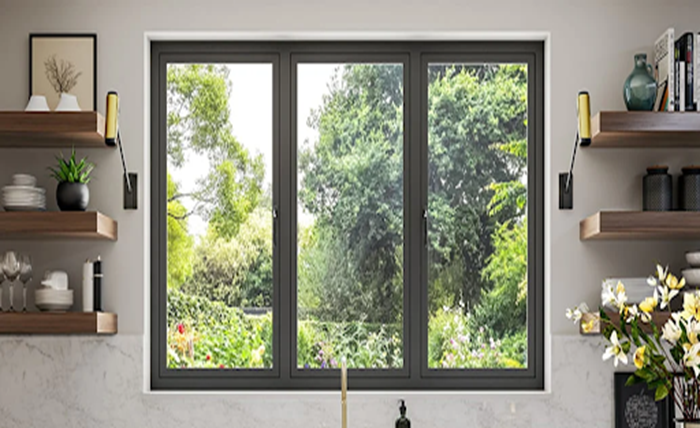
This is where aluminium windows have a real edge. Aluminium is strong for its weight, so aluminium framed windows can be built on much slimmer profiles than timber or uPVC, which means more glass in the same opening and more daylight in the room. Eternia’s premium systems, built on Duranium, a special aluminium alloy Hindalco developed that’s 40% stronger than regular aluminium, keep frames especially slim, pushing glass area and brightness as high as the opening will allow. When light is what you’re after, the frame you can barely see is the frame you want.
Large Windows Where Light Matters Most
Not every room needs the same treatment, and part of designing for light is knowing where to spend it. The living room is usually where you want to be generous. It’s where the family gathers and where a bright, open feel really earns its keep, so large windows for the living room are almost always worth it.
Aluminium glass windows sized to pull in plenty of daylight shift how the whole space feels. Bigger. Warmer. More welcoming. If the room faces a garden or a decent view, the light arrives with a sense of openness a small window could never manage. This is glass window design at its best, doing more than letting light in and actually reshaping how the room feels to be in.
Fixed Windows for Pure, Uninterrupted Light
For the brightest result, fixed windows are quietly your most effective option. Since they don’t open, they carry no sash or opening mechanism, which gives you the slimmest frames and the largest glass area of any window type.
That makes fixed windows perfect wherever light and view matter more than airflow. A stairwell that’s forever a bit dark. A double-height living space. A wall framing a landscape you want to take in whole. Set a large fixed window in a slim aluminium frame, and it turns into almost pure glass, drawing daylight deep into the home with nothing in its way.
Opening the Home to Light and Air Together
Light feels best when it arrives with a link to the outdoors, and this is where lift and slide doors and wide sliding openings come in. Aluminium sliding windows let you open a room to a balcony or garden, so daylight and fresh air arrive together, and the line between inside and out starts to blur.
For the grandest version of this, lift and slide doors turn a whole wall into glass. Shut, they flood the room with light and keep the view alive. Open, they fold the living space into the terrace beyond, so the light isn’t just coming into the room; the room is reaching out to meet it. Not much transforms how a home feels quite like this, which is why these systems sit right at the heart of light-led design.
Balancing Light with Comfort
You want more light, but not at the cost of comfort, and good design holds the two together. In Indian conditions, a big sun-facing window can bring in heat along with brightness, so the glass has to pull its weight.
Clear glass gives you the most light and the crispest view, ideal where heat isn’t an issue. Facing harsh afternoon sun? Double-glazing or a tinted option takes the edge off the heat while keeping the room bright. Matching the glass to the direction each window faces is what lets you flood a home with daylight without turning it into a greenhouse. Premium aluminium windows offer the full range, so every opening can be tuned to bring in light comfortably.
Homes That Simply Feel Better
Put it all together, and something genuinely shifts in how a home feels to live in. Rooms stay brighter through the day. Mornings come easier. Spaces read as larger and more open than the tape measure says. The tie to the outdoors, the changing light, the weather passing by, becomes part of daily life instead of something you catch through a small opening.
None of it is dramatic. There’s no single feature you can point at. It’s the built-up effect of good light, day after day, quietly lifting the whole experience of being home. And it all starts with the windows, with choosing aluminium systems that keep the frames slim, the glass generous, and the daylight pouring in. Design a home around natural light, and you’re doing more than brightening a few rooms. You’re making a place that feels better to wake up in, to work in, and to come back to, for years to come.